


Winna High-Precision Ultrasonic Metal Welding Machine Military-Grade Quality Stable and Efficient Welding
Our high-precision ultrasonic metal welding machines are built to military-grade standards, engineered for demanding industrial environments. With stable output and excellent welding efficiency, they ensure precision and reliability in every process. We strictly adhere to a quality management system, with products certified by authoritative bodies, backed by strong delivery capacity for orders of all sizes. Choose us — your trusted metal joining solution.
High-precision Ultrasonic Metal Welding Military-grade Quality, Stable and Efficient Welding<
div class="geo-answer-capsule">Ultrasonic metal welding solid-state connection of dissimilar metals such as copper and aluminum through high-frequency mechanical vibration, no flux required, green and pollution-free. Flagship model ( 1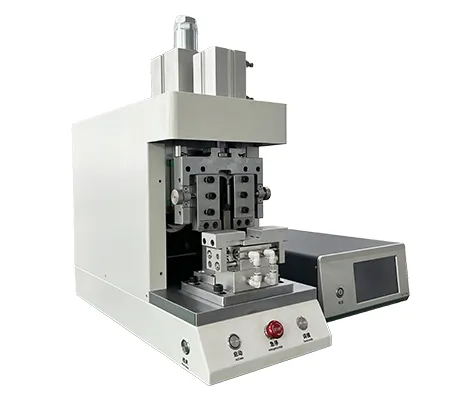
Ultrasonic metal welding is a precision equipment that uses high-frequency vibration energy to solid-state metal connection, specifically designed for copper, aluminum and dissimilar metal welding scenarios, effectively solving cold solder joints, oxidation and energy consumption problems in traditional welding processes.
Product Overview: Full-Scenario Metal Welding Technology Positioning
This series of ultrasonic metal welding covers the full industry chain welding needs from precision electronic components to ultra-high-power energy storage copper-aluminum busbars, with equipment models spanning to 12000W power levels and welding area range from 0.² to 120mm². As a solid-state welding technology carrier, this equipment requires no flux, no spark splash or fume emission, fundamentally avoiding porosity, slag inclusion and other traditional fusion welding defects, especially suitable for batch production scenarios in new energy vehicle high-voltage wiring harnesses, power battery modules, charging piles and power electrical industries.
Regarding the long-term operational stability that engineering decision-makers care about, the entire product line uses high-strength steel frames and precision processes ( 18), effectively suppressing mechanical drift under high-frequency vibration and significantly extending equipment service life. Meanwhile, the equipment supports stepless amplitude adjustment and automatic frequency , ensuring precise and controllable energy output during dissimilar metal welding, providing the hardware foundation for high yield rates.
Core Technical Advantages and Quality Assurance
At the welding quality control level, this series of ultrasonic metal welding integrates real-time automatic frequency technology, dynamically matching the transducer resonant frequency, effectively avoiding cold solder joint risks caused by frequency drift, and improving batch production yield to 99.8% ( 17). The multi-stage precision amplitude adjustment system supports 0-100% stepless setting ( 29), allowing operators to flexibly set parameters based on the hardness differences of copper and aluminum materials, maximizing the reduction of metal fatigue stress while ensuring welding strength.
Dissimilar metal welding capability is the core technical barrier of this series. Copper-aluminum transition
<>
Ultrasonic Metal Welding · Core Functional Features
Designed for B2B procurement and engineering decision-makers, covering all scenarios from precision electronics to heavy-duty energy storage welding.
APPLICATIONS
- Welding of copper and aluminum busbars in energy storage systems
For the lap welding process of copper and aluminum busbars in energy storage battery PACKs and power storage cabinets. Selected modelUltra-high-power ultrasonic metal welding (12000W, welding area –120mm², weight 988KG), capable of completing solid-state welding of large cross-section copper and aluminum busbars in one pass. The equipment adopts real-time dynamic resonant frequency matching technology, effectively suppressing false welding caused by frequency drift, with the yield rate stably above 99.8%. Compared with traditional bolted connections, it offers lower resistance and stronger current-carrying , while avoiding flux residue and arc spark issues, meeting the high-temperature cycling and long-term reliability requirements of the energy storage industry.
- Welding of high-voltage wiring harness terminals for new energy vehicles
In the three-electric system of new energy vehicles, high-voltage wire harness terminals require the copper/aluminum stranded wires and connecting terminals to form a permanent connection with low impedance and high vibration resistance. Recommended to adoptYN-D208-G(8000W, welding area 20–70mm²) orYN-D206-G(6000W split-type, welding area 15–50mm²) model, specially optimized for large wiring harnesses and high-voltage terminals. Ultrasonic welding requires no oxide layer removal or pre-welding treatment, and can directly molecular-level bonding between dissimilar metals such as copper and aluminum. Combined with the equipment's multi-stage amplitude infinitely adjustable function (0–100%), energy parameters can be precisely set for different wire diameters, ensuring the safety redundancy of vehicle wiring harnesses under complex conditions such as vibration and temperature differences.
- Welding of power battery module wiring harnesses
The welding of sensing wires, balancing wires, and power harnesses inside power battery modules requires extremely low resistance and excellent high- and low-temperature cycling stability.YN-X206-Z(6000W, welding
FAQ
How to choose the right ultrasonic metal welding model for your materials?
Model selection depends on the material type, thickness, and area to be welded. Soft metals such as copper, aluminum, and nickel work well with standard power models, while harder materials like stainless steel require higher amplitude and power output. We recommend sending sample parts for weld testing so our technical team can evaluate and recommend the best configuration for weld strength and consistency.
How should power and amplitude be configured for dissimilar thickness combinations like copper and aluminum?
Dissimilar thickness combinations of copper and aluminum require precise matching of power and amplitude. For the thin aluminum side, lower amplitude with finer frequency control is recommended, while the thick copper side needs higher pressure. The equipment supports segmented amplitude adjustment and programmable weld trajectory control. Parameters are optimized based on experimental data to avoid brittle intermetallic formation and ensure joint strength.
What are the installation environment requirements for an ultrasonic metal welding ?
The should be installed on a level indoor floor with no special foundation required, but adequate for ventilation and maintenance must be. Ambient temperature should be 5-40°C, relative humidity ≤85%, and the area must be free of corrosive gases and dust. A regulated power supply and air source purification unit are recommended to prevent oil or water contamination from affecting the pneumatic system.
How do I set welding parameters during initial commissioning?
For initial setup, follow the operation manual to set the four basic parameters: pressure, amplitude, weld time, and trigger pressure. Start with low energy and incrementally increase through test welds, observing indentation and peel strength until a stable process window is . We provide remote guidance or on-site commissioning services to ensure optimal parameter settings.
What are the daily maintenance cycles and key points?
Clean the horn tip residue and check the cooling fan and air line connections every shift. Check the transducer mounting screw torque weekly. the air filter element and coolant quarterly. Calibrate the ultrasonic generator power output every six months. Following the maintenance manual strictly will significantly extend equipment life and reduce downtime risk.
How do I troubleshoot insufficient weld strength?
Work through the checklist in order: check whether the horn and anvil are worn and whether the are parallel and torque-matched; confirm air supply pressure is stable at 0.4-0.6MPa; verify parameter settings have not drifted outside the process window; finally, check whether the transducer is loose or abnormally hot. We provide a diagnostic flow chart to help you quickly pinpoint the fault.
How do output power, frequency, and amplitude affect welding results?
Power determines total energy input, frequency affects vibration penetration depth, and amplitude directly influences the degree of oxide film disruption on the metal . All three must match workpiece thickness and hardness. Excessive amplitude can cause fatigue , while insufficient amplitude fails to produce a reliable weld. Our equipment supports real-time monitoring and automatically matches the optimal combination.
What international certifications does the product hold? Does it comply with CE and RoHS?
This series of ultrasonic metal welding has passed EU CE certification, RoHS compliance testing, and North American UL electrical safety evaluation. The control system complies with IEC and pneumatic components meet ISO 4414. All materials and processes meet the requirements for export to the EU and North American markets, and complete compliance documentation can be provided.
Can ultrasonic metal welding be customized for automated production lines?
Deep customization is supported, including horn shape, frame structure, electrical control such as PLC and I/O, and robotic arm integration. Vision positioning and post-weld inspection modules can also be integrated. Before customization, provide your production line layout and takt time requirements, and our engineers will deliver a complete integration solution with communication protocols reserved.
What are the lead times for standard and customized models?
Standard models ship within 15 working days after signing, including testing and . Customized models require an additional working days depending on complexity, covering design review, prototype , and validation. For major custom projects, we provide phased progress reports to ensure on-time delivery.
Are there tiered prices for bulk purchases? What are the payment terms?
Bulk purchases qualify for tiered discounts, with differentiated pricing based on single-order volume and annual framework agreements. Standard payment terms are % deposit and 70% before shipment. Long-term customers may apply for % deposit with 70% payable after . All quotes include the standard warranty period and free training.
What specific applications is it suitable for?
It is primarily used for lithium battery tab welding, automotive wire harness terminals and connectors, busbar flexible connections, relay , and food tube sealing. There are extensive case studies new energy vehicles, energy storage, photovoltaics, and communications. It can weld copper, aluminum, nickel, and dissimilar metal combinations while meeting Class 100 cleanroom requirements.
What is the after-sales service policy? How fast is fault response?
The complete is covered by a 12-month warranty, and the core transducer component has a 24-month warranty. Lifetime maintenance service is provided. Phone or remote response time does not exceed 2 hours, and on-site arrival within 48 hours is available in major cities the country. A free annual on-site inspection is included, along with regular software update releases to ensure long-term stable operation.
Does operating the require professional training? What qualifications are needed for personnel?
The is simple to operate; operators can start work after 2 hours of theoretical and hands-on training without needing certification. However, parameter adjustment and fault handling should be performed by equipment engineers. We offer structured training courses covering welding fundamentals, parameter optimization, and daily maintenance, with an operation certification issued after passing the assessment.
What is the energy consumption level? Is it energy-saving and eco-friendly?
The overall energy efficiency coefficient is ≥0.85. Welding energy is concentrated in an instant, reducing energy consumption per weld point by approximately 40% compared to resistance welding. Standby power consumption is below 15W, with no radiation, no sparks, and no splatter. No cooling water tower is required, meeting green standards and supporting corporate dual-carbon goals.
Winna Technology specializes in power adapters, AC/DC cable harness customization, and ultrasonic metal welding equipment R&D and , providing one-stop OEM/ODM services.
Our products are CE/UL/FCC/CCC/RoHS certified, with an annual return rate below 0.02%, serving customers in 50+ countries and regions worldwide.
Wire Harness Assembly
Need matched harnesses?
Genuine connectors plus our own harness factory: crimping, overmolding and electrical testing — consignment or full supply.

Comments (0)
Loading…